


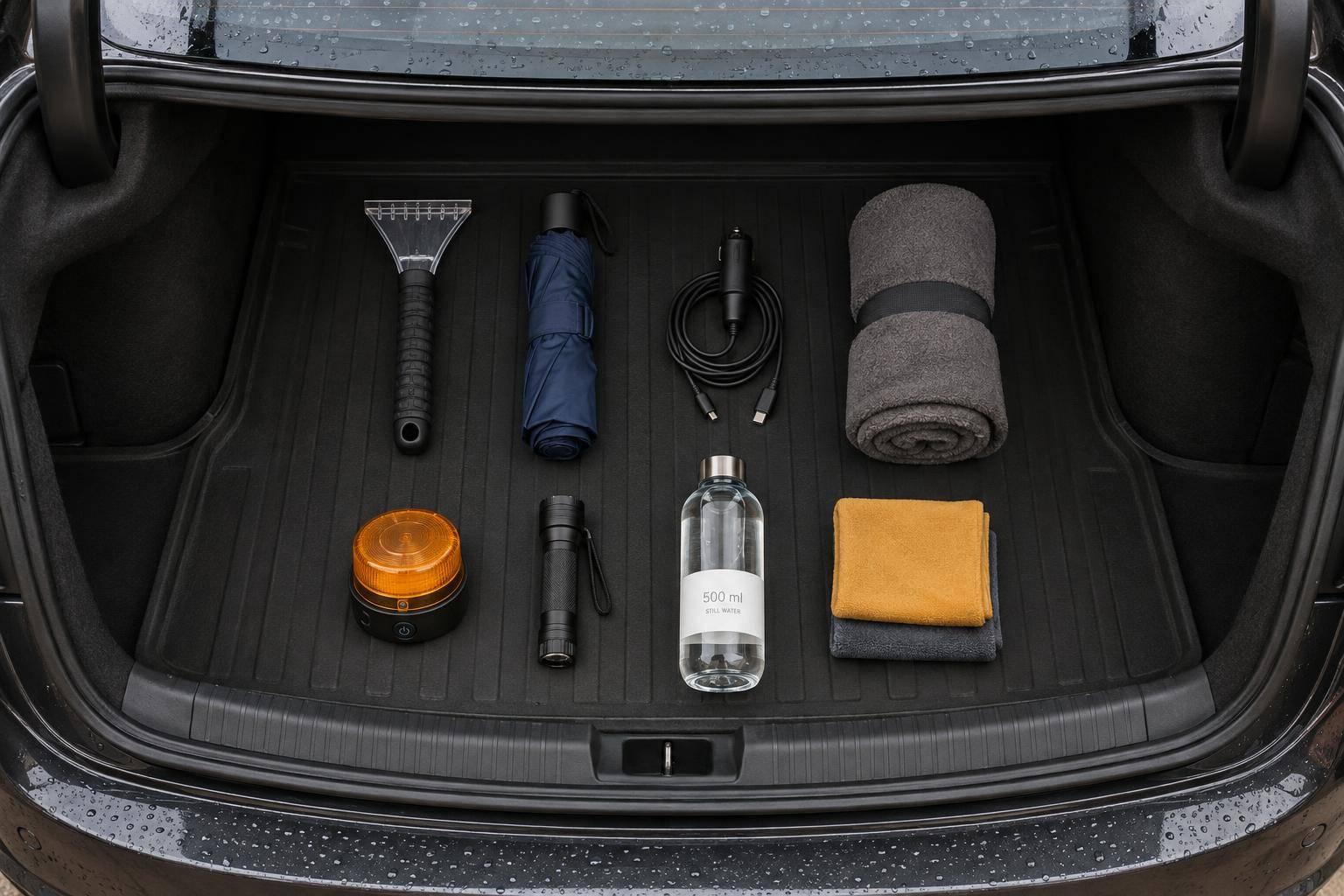
Weather-Ready Transfer Gear: 8 Items Drivers Pack
Eight essential items drivers pack for safe, dry transfers: scraper, umbrella, charger, blanket, V‑16 beacon, torch, water, cloths.
Weather-Ready Transfer Gear: 8 Items Drivers Pack
I check the route forecast and pack eight items to keep pickups safe, dry and comfortable. Before setting off, I check the vehicle, charge my phone and keep required safety gear within reach.
Here’s what I pack - and why:
- Ice scraper and snow brush: to clear frozen windows and mirrors.
- Compact umbrella: to shelter passengers and luggage.
- Phone charger and power bank: to stay in touch during delays.
- Warm blanket: for comfort during cold waits.
- Certified connected V-16 beacon: to signal a stopped vehicle. In Spain, this replaced warning triangles for Spanish-registered cars on 1 January 2026.
- LED torch: to check dark paths and loading areas.
- Bottled water: for heat and longer waits.
- Microfibre cleaning cloths: to dry surfaces and keep dirt away from passenger areas.
My rule: <u>check the car first, then the kit</u>. I keep everything clean, charged and easy to reach - and treat comfort items as extras, not a substitute for maintenance.
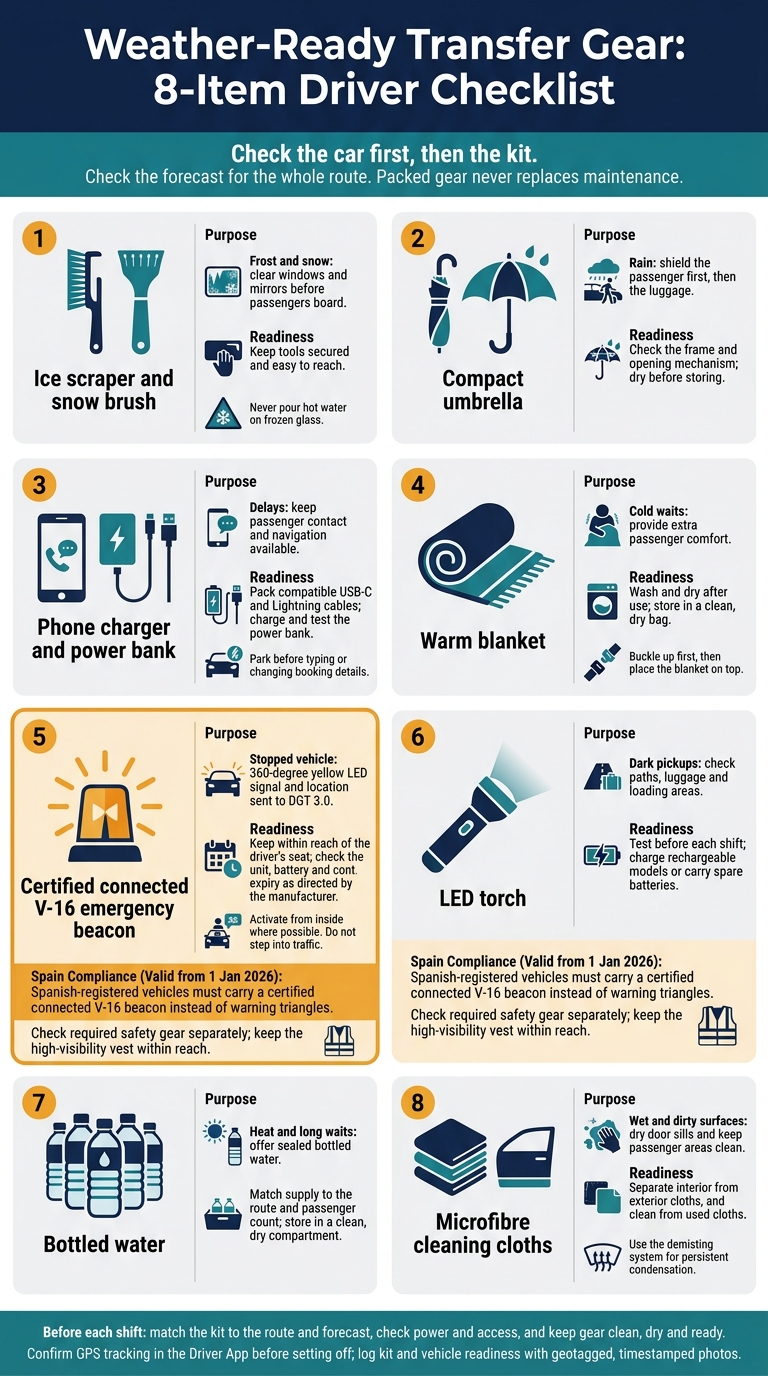
Weather-Ready Transfer Gear: 8-Item Driver Checklist
20 CRITICAL, Low Cost Items for Your Winter Travel Safety Kit
sbb-itb-ff87004
Check the Vehicle and Forecast Before Pickup
Check the forecast for the whole route, not just the pickup point. In frost, make sure windows and mirrors are clear. For rain, check that the wipers work and floor mats are dry. In hot weather, check the air conditioning and coolant. Allow extra travel time if road conditions could slow you down. Then check the car and your kit.
Charge your phone and keep a charger or power bank within reach. Open the Driver App and confirm GPS tracking before you set off.
Check the passenger areas and boot for moisture, and remove any rubbish. Keep comfort items separate from required safety gear. The mandatory connected V-16 beacon and high-visibility vest should be within reach.
Finish with a quick roadworthiness check: tyres, brakes, fluids, permits and documents. Packed gear never replaces maintenance. Once the vehicle is ready, check the eight items drivers pack for the shift.
1. Ice Scraper and Snow Brush
When frost or light snow settles, clear the glass first.
Why it matters at pickup
Use a soft-bristle snow brush to sweep off loose snow. Then scrape frost from the windows and mirrors before passengers board. Clear glass helps keep pickups safe and on time.
Storage and maintenance
Keep both tools in a secured compartment within easy reach. Carry winter washer fluid rated for the coldest temperature you expect, measured in °C.
Safety and legal considerations
Never pour hot water on frozen glass. Allow frozen wipers to thaw before using them. Spain requires a clear field of vision, and ice or snow blocking the glass can lead to a fine of about 200 €.
2. Compact Umbrella
Keep a compact umbrella within reach for rainy pickups.
Rain at pickup
Even a short walk to the car can leave passengers and bags soaked. Open the umbrella before leaving shelter. Shield the passenger first, then cover the luggage as you load the boot. For a 7transfers meet and greet pickup, agree on the walk before leaving the arrivals hall.
Storage and maintenance
Check the frame and opening mechanism for damage before each shift. Let the umbrella dry completely before storing it to prevent dampness and odours inside the vehicle.
Safety and legal considerations
Hold the canopy high enough to keep your view clear and leave the path to the door unobstructed. Follow the airport meeting instructions in the booking confirmation, and use kerbside pickup areas only where permitted.
3. Phone Charger and Power Bank
Why it matters in bad weather
When bad weather delays a pickup, your phone is the main link to passengers and dispatch. Navigation and flight updates also run for longer, so pack a charger and power bank. A flat battery can hold up pickup updates and passenger contact.
Storage and maintenance
Pack USB-C and Lightning cables, and make sure they fit your phone, charger and power bank. Charge the power bank before each shift and test that it can fully recharge your phone. Keep the kit dry and away from heat and condensation.
Safety and legal considerations
Secure cables with clips or ties, keeping them clear of the steering wheel, gear stick and pedals. Use a phone mount for hands-free navigation and updates. Park before typing or changing booking details.
4. Warm Blanket
Cold waits at pickup
Waiting in the cold at pickup can leave passengers uncomfortable. A clean blanket makes the wait more comfortable.
Why drivers pack it
Keep the blanket within reach for passengers during pickup waits. It’s only for extra comfort, so keep it folded and ready for the next job.
Keep it clean and ready
After each use, wash and dry the blanket, then store it in a clean, dry bag.
Use it after buckling up
Buckle the passenger in first, then place the blanket on top.
5. Certified Connected V-16 Emergency Beacon
Weather-related pickup problem
Rain, fog or snow can make a stalled transfer vehicle difficult to spot at the kerb or on the approach road. When activated, a connected V-16 beacon emits a 360-degree yellow LED signal and sends the vehicle’s location to DGT 3.0.
Use, storage and maintenance
Keep the beacon in a front-seat compartment so you can activate it without leaving the vehicle. Follow the manufacturer’s instructions and activate it from inside where possible. Do not step into traffic.
Before each shift, check the unit, battery and connectivity expiry date as directed by the manufacturer.
Safety and legal considerations
From 1 January 2026, Spanish-registered vehicles must carry a certified connected V-16 beacon instead of warning triangles.
Next, pack the LED torch for dark car parks and roadside checks.
6. LED Torch
Weather-related pickup problem
Rain and poor lighting can make kerb edges and puddles hard to see. An LED torch helps drivers escort passengers safely and check the walking route, luggage and areas around the vehicle before loading.
Driver and passenger benefit
Light the path, inspect luggage and check the loading area before passengers board.
Storage and maintenance
Keep the torch in the glovebox or driver’s door pocket, and test it before each shift. Fully charge rechargeable models and carry spare batteries for battery-powered torches.
Safety and legal considerations
Use the torch only for close-up visibility.
7. Bottled Water
Weather-related pickup problem
Sealed bottled water helps passengers cope with heat, long waits and delayed pickups.
Driver and passenger benefit
Pack enough bottles for the route and passenger count. Larger vehicles and longer transfers need more.
Storage and maintenance
Keep sealed bottles in a clean, dry compartment.
Next, pack microfibre cloths for wet hands, seats and luggage.
8. Microfibre Cleaning Cloths
Weather-related pickup problem
Rain leaves door sills wet and carries dirt into the boot. Keep separate interior and exterior cloths so you don’t transfer grit to passenger surfaces.
Driver and passenger benefit
Use a clean interior cloth and an approved cleaner to wipe high-touch areas. Dry the door sills and check the boot before loading luggage.
Storage and maintenance
Store clean cloths apart from used ones. Swap dirty or damp cloths for clean, dry ones to avoid spreading moisture and dirt. Keep both sets visible and separate so you can grab the right cloth at pickup.
Safety and legal considerations
Follow the manufacturer’s guidance for wet seat belts and use only approved cleaners. If condensation persists, use the demisting system instead of repeatedly wiping the windows. This helps keep cleaning quick when the weather changes during a shift. Have the cloths ready for the pre-shift check.
Check All 8 Items Before Each Shift
Once the gear is packed, do a quick pre-shift check. Match the kit to your route and the forecast - not just a checklist of what’s in the vehicle.
Before setting off, make sure the scraper, snow brush, umbrella, blanket, cables, power bank, torch, water and microfibre cloths are clean, dry and ready to use.
Test power and check access. Confirm the phone charger works, and fully charge the power bank and LED torch. Keep the umbrella close at hand and the scraper easy to reach on mountain routes. Take extra water for hot weather, a blanket for cold conditions and a torch for late-night pickups.
Check compliance gear separately from comfort items. Check the certified connected V-16 beacon on its own: it must be charged, certified and within reach of the driver’s seat.
Before starting work, log kit and vehicle readiness in the Driver App with geotagged, timestamped photos.
FAQs
How can I check if my V-16 beacon is certified?
The search results provided don’t explain how to check whether your V-16 beacon is certified.
Do foreign-registered cars need a V-16 beacon in Spain?
The provided search results do not confirm whether foreign-registered cars must carry a V-16 beacon in Spain.
When should severe weather delay a transfer?
Severe weather is outside reasonable control, so 7transfers and its partners are not liable for delays or service failures caused by it.
Flight tracking helps manage arrival times. But if weather-related flight cancellations or major disruptions could stop you from meeting your driver within the included waiting window, contact 7transfers’ 24/7 customer support immediately. The team can help with possible adjustments or new arrangements before your booking is affected.