


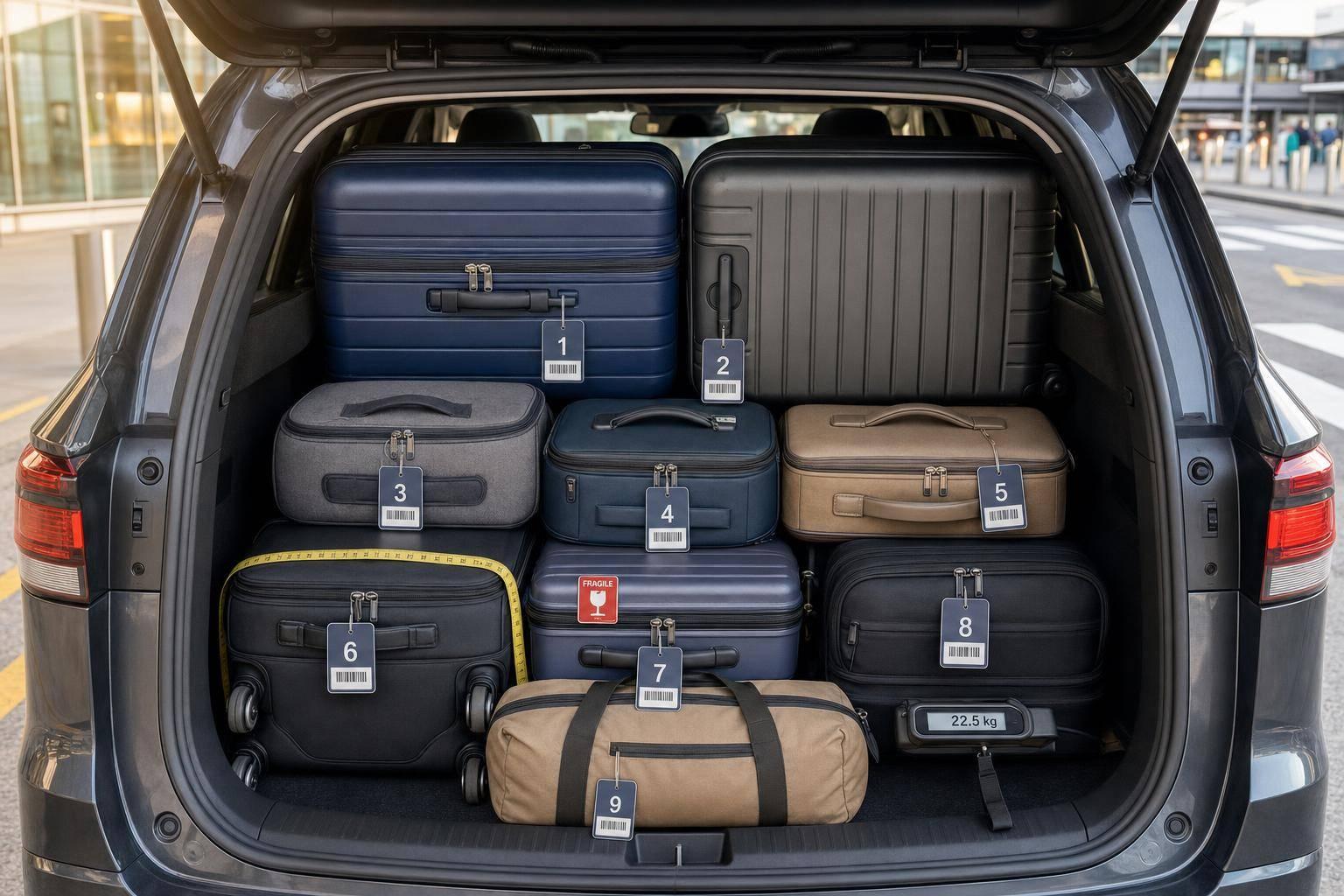
9 Luggage Tips for Airport Transfers
Nine practical checks - bag size, weight, labels, fragile items and loading order - to avoid boot-space issues and speed airport transfers.
9 Luggage Tips for Airport Transfers
Most airport transfer luggage problems start before you leave home. In my view, the fix is simple: check bag count, measure each case in cm, spread weight, keep papers close, label bags, protect fragile items, group security items, declare bulky gear, and load by stop order.
If I do those 9 checks before pickup, I cut the usual problems: a car with too little boot space, slow loading, mixed-up bags, and hold-ups at the airport. That matters even more for group trips, family travel, or flights into busy Spanish airports where a few extra minutes can turn into 30–45 minutes of stress.
What I’d check first:
- Vehicle space for suitcases, cabin bags, and large items
- Bag size including wheels and handles
- Weight split across cases
- Passport, phone, medicines, and booking details in one easy-reach bag
- Labels inside and outside each bag
- Fragile items packed apart and mentioned before pickup
- Liquids and electronics in one top-access pouch
- Strollers, golf bags, skis, or wheelchairs declared in advance
- Loading order based on the drop-off sequence
Quick comparison
| Tip | What I do | Why it helps |
|---|---|---|
| Check vehicle limits | Match passengers and luggage to the car | Helps avoid space issues at pickup |
| Measure bags | Check height, width, and depth in cm | Stops last-minute loading problems |
| Balance weight | Split heavy items across cases | Makes lifting and loading easier |
| Keep an easy-access bag | Carry documents, phone, chargers, and medicines | Keeps key items close |
| Label bags | Add tags outside and inside | Cuts mix-ups at pickup and drop-off |
| Protect fragile items | Pad them and flag them in advance | Helps keep breakable items safer |
| Separate security items | Put liquids and electronics together | Makes airport screening less messy |
| Prepare bulky gear | Fold and declare large items early | Helps get the right vehicle |
| Load by stop order | Put first-stop bags in last | Makes drop-off simpler |
For me, the main point is simple: good luggage prep makes the transfer smoother from door to terminal.
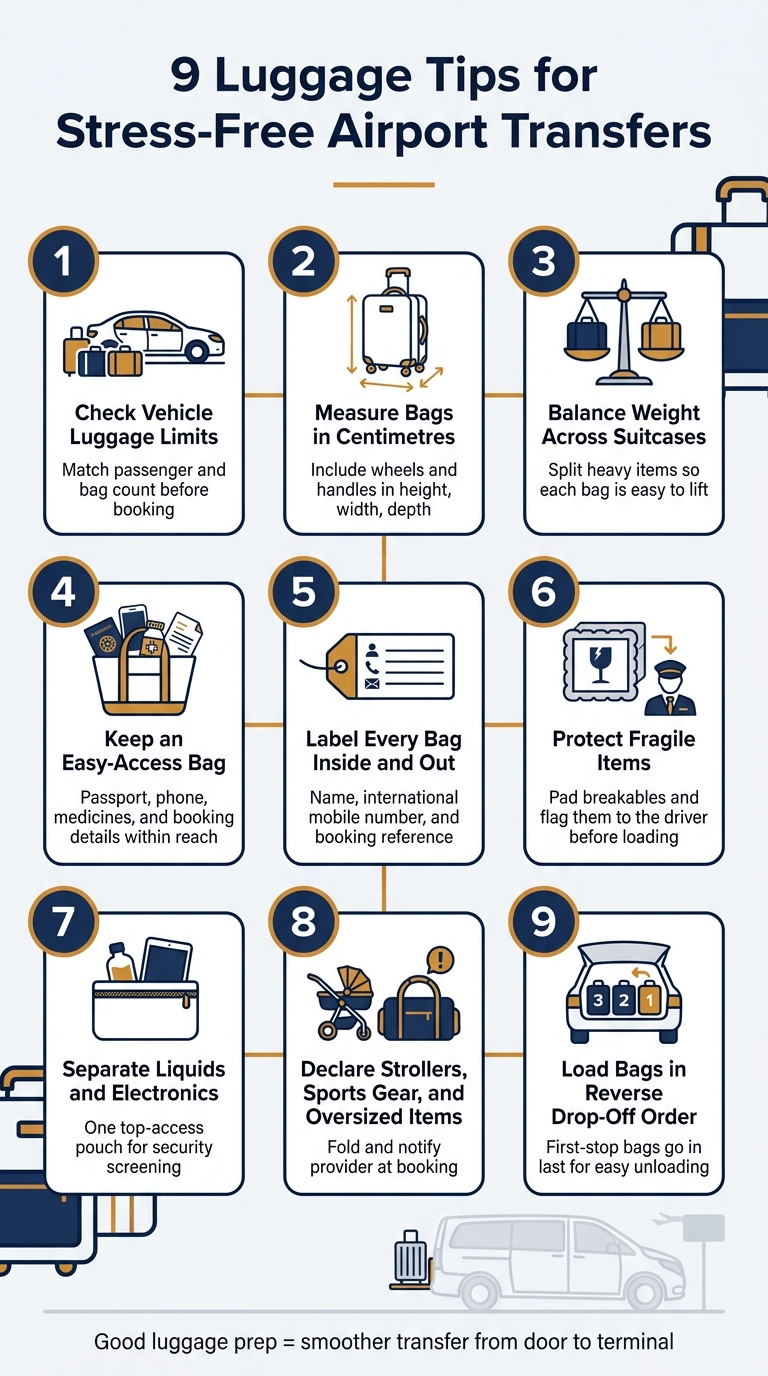
9 Luggage Tips for Stress-Free Airport Transfers
Why Luggage Preparation Matters for Airport Transfers
A few minutes spent sorting your luggage can save a lot of hassle at the airport. It helps avoid slow handovers, awkward loading, and the classic problem of turning up with more bags than the vehicle can take. Put simply, the goal is to avoid surprises before you get to the kerb.
Transfer providers assign vehicles based on the luggage count you give at the time of booking. If those details are off, the car that arrives may not have enough space, which can delay pickup and make loading less safe.
Good organisation also makes the whole process easier. Bags that are packed neatly are simpler to stack, secure, and unload without fuss. That’s why the next tips focus on size, balance, labels, and loading order.
With that in mind, the next tips show exactly what to check before pickup.
sbb-itb-ff87004
1. Check Vehicle Luggage Limits Before You Book
Start with the vehicle’s bag limit. Transfer companies assign cars based on the number of passengers and bags you enter when booking. If those details are off, the car may not have enough room before it even sets off.
Providers also separate suitcases and cabin bags when working out boot space. When booking with 7transfers, enter the exact number of passengers and bags so the right vehicle is recommended.
It’s also smart to check the vehicle class before you book if you’re bringing a stroller, sports gear, or a wheelchair. Large items take up space as well, so include them before you confirm the booking.
2. Measure Your Bags in Centimetres Before Travel Day
Check that every bag fits the vehicle before travel day. Once your vehicle is confirmed, compare each bag to the space available.
Measure the height, width, and depth of every bag in centimetres, including wheels and handles. That part matters more than many people think. A bag can look compact, then those extra centimetres from the wheels make it harder to load.
Make sure your bag sizes match the vehicle class you booked.
Cabin bags count too. They still take up space. Once you've measured everything, the next step is to see how the weight should be spread across the bags.
Accurate measurements help loading move fast and cut last-minute reshuffling.
3. Balance Weight Evenly Across Suitcases
Once the bags fit, spread the weight across them so each one is easier to lift and load. Put heavy items in both suitcases instead of stuffing most of the weight into just one. If you’re travelling with two cases, split the heaviest things between them.
Each bag should be light enough for one person to lift without a struggle. That makes loading faster at pickup and helps avoid the awkward “why is this one twice as heavy?” moment.
Next, keep documents and other must-haves in a separate easy-access bag.
4. Keep Documents and Essentials in an Easy-Access Bag
Once your bags are balanced, put the things you might need during the transfer in a separate cabin bag. A small backpack or handbag works well for your passport or ID, booking confirmation, phone, chargers, medicines, and valuables.
Keep your booking confirmation close at hand. It includes the reference, meeting instructions, and driver contact details. It’s smart to save a screenshot or carry a printout too.
Your phone should stay with you as well, since you may get pickup updates. If something goes wrong, check the meeting instructions first. If that doesn’t sort it, use the driver number in your booking details or contact support.
Label every bag clearly too. It’s a simple step, but it can save hassle at pickup and drop-off.
5. Add Clear Luggage Labels Inside and Out
Once you’ve sorted your essentials, label every bag clearly. It sounds simple, but at a busy pickup point, a clear tag can save a lot of back-and-forth. The driver can spot your luggage fast and match it to the booking without any fuss.
Use two labels for each bag: one on the outside and one inside. If the outer tag gets ripped off in transit, the card inside still helps identify the bag. On both labels, add your full name, international mobile number, and booking reference. Leave out your home address. A phone number is enough.
If you’re travelling in a group, colour-coded tags make sorting much easier and help avoid mix-ups.
Once each bag is marked, pack fragile items separately.
6. Pack Fragile Items with Extra Protection
Once each bag is labelled, set aside any fragile ones before loading. When you hand the bags over, tell the driver which bag has breakable items so it can be placed on top and kept away from heavier luggage.
If you're travelling with delicate items or fragile electronics, add a handling note to your booking ahead of time so the driver knows before arrival. That helps the most delicate bag go in last and stay on top.
7. Separate Liquids and Security-Check Items
At airport security, it helps to keep anything you may need to take out in one separate pouch. Put liquids, electronics, and other security-check items in a small, top-access pouch inside your carry-on.
That makes it much easier to get through security without opening your main suitcase in the middle of the airport.
Keep everything you must remove at security in that same pouch, so it’s easy to grab when your bag goes through screening. After that, set aside any oversized items before pickup.
8. Prepare Strollers, Sports Gear, and Oversized Items in Advance
With bulky items, the prep starts before pickup. When you book, declare anything large so the right vehicle is assigned. Oversized equipment such as golf bags, skis, pushchairs, or wheelchairs should be declared in advance. If you’re not sure whether a specific item will fit, contact support before booking.
Before pickup, fold and secure bulky items so they’re ready to load. Pushchairs should be fully collapsed. Sports gear and other oversized items should be packed well, so they stay stable and are easy to handle.
7transfers airport pickups include 45 minutes of complimentary waiting time after landing, which gives you extra time to collect bulky luggage.
Once those larger items are folded and secured, load the remaining bags in drop-off order.
9. Load Bags in the Right Order for Drop-Off
Once bulky items are folded and tied down, load the rest of the bags in reverse drop-off order. This makes a bigger difference than people think.
Here’s the simple rule: bags for the first stop should go in last, so they’re closest to the boot door. Bags for the final stop should go furthest inside. That way, you don’t end up pulling half the boot out just to grab one bag. At busy drop-off points, a tidy boot can save time and cut the usual stress.
Before anyone starts loading, tell the driver your stop sequence clearly. If you have more than one stop, or one bag that needs to come out first, say so before the boot is packed. Then the driver can load everything in the right order.
Quick Capacity and Packing Reference
Use these tables as a last quick check for vehicle size, luggage space, and bulky items.
Vehicle Capacity by Type
| Vehicle Type | Passengers | Approx. Suitcases | Best For |
|---|---|---|---|
| Standard / Executive | 1–3 | 2–3 | Solo travellers, couples, or small groups |
| Minivan / V-Class | 6–7 | 6–7 | Families and small groups |
| Business Van | 3 | 4 suitcases + 3 cabin bags | Corporate or mixed-luggage groups |
| Minibus | 8–16 | 10–15 | Large groups or heavy luggage |
If you’re close to the limit, check luggage capacity before you book a transfer online. A car might fit the passenger count on paper, but bags can change the picture fast.
Standard Suitcase Size Reference (cm)
| Bag Type | Height (cm) | Width (cm) | Depth (cm) |
|---|---|---|---|
| Cabin bag | 45–55 | 35–40 | 20–25 |
| Medium Checked | 60–68 | 40–45 | 25–30 |
| Large Checked | 70–80 | 45–50 | 30–35 |
Use this table to compare your bag’s height, width, and depth before travel. It’s a simple check, but it can save a lot of hassle at pickup.
Special-Item Preparation Notes
For bulky items, the booking stage matters most. Share the details early so the provider can plan the right vehicle.
| Item | Before pickup | Load note |
|---|---|---|
| Stroller | Fully fold and collapse it. Remove sunshades or bags from the handles. | Notify your provider during booking. |
| Wheelchair | Fold it and remove detachable footrests. Note whether it is electric or non-folding. | Non-folding models may need a larger vehicle. |
| Golf Bag | Use a zipped travel cover or hard case. | Often needs a larger vehicle because of its length. |
| Ski Bag | Pack skis in a padded bag and secure the poles inside. | Confirm boot space before booking. |
What to Confirm with Your Transfer Provider Before You Travel
Once your bags are packed, take a minute to confirm the booking details that affect space, timing, and the handover.
First, check your bag count. Confirm the exact number of suitcases, cabin bags, and any oversized items. If you're travelling with something bulky, mention it ahead of time. The provider can only assign the right vehicle if it knows what it has to carry.
You should also share your flight number and arrival time. 7transfers uses this information for flight tracking and adjusted pickup times for delays or early arrivals.
Then open your confirmation email and look for the exact meeting point details. This could be the arrivals hall or a named meeting point. Save the support number too, just in case you can't find your driver. When these details are clear, pickup tends to be faster and far less messy.
| Confirm | Why it matters |
|---|---|
| Number of suitcases, cabin bags, and oversized items | Ensures the vehicle has enough boot space |
| Oversized or special items | May require a larger vehicle class |
| Flight number and arrival time | Enables real-time tracking and adjusted pickup |
| Meeting point details | Avoids confusion at the airport |
Conclusion
These nine checks help keep airport transfers simple. A few small things - bag size, weight balance, labels, and loading order - can cut a lot of stress on transfer day.
When your bags are packed and your booking details are correct, pickup and drop-off tend to run more smoothly.
FAQs
How much luggage is too much for one transfer?
Your luggage needs to match the capacity of the vehicle you book. At 7transfers, each vehicle is assigned based on the number of passengers and the total volume of luggage.
When you book, check the luggage allowance listed for each vehicle type. For example, a Business Van usually fits 4 large bags and 3 pieces of hand luggage.
What details should I confirm with the transfer provider before travel?
Before you travel, double-check your pick-up and drop-off locations, travel date and time, and passenger numbers. It sounds basic, but this is where small mistakes can turn into big headaches. Review your booking confirmation and read any meeting instructions with care.
If you asked for special requirements, like child or baby seats, make sure they’re listed on the booking. It’s also smart to keep your booking reference number close at hand in case you need to contact the provider or support team.
What should I do if I’m bringing a stroller or sports gear?
Share the correct amount of luggage when you book with 7transfers. That way, the driver can arrive with a vehicle that fits your group and bags properly, making the transfer more comfortable and secure.
If you’re travelling with young children, you can also ask for child seats, baby seats, or Maxi-Cosi options during the booking process.