


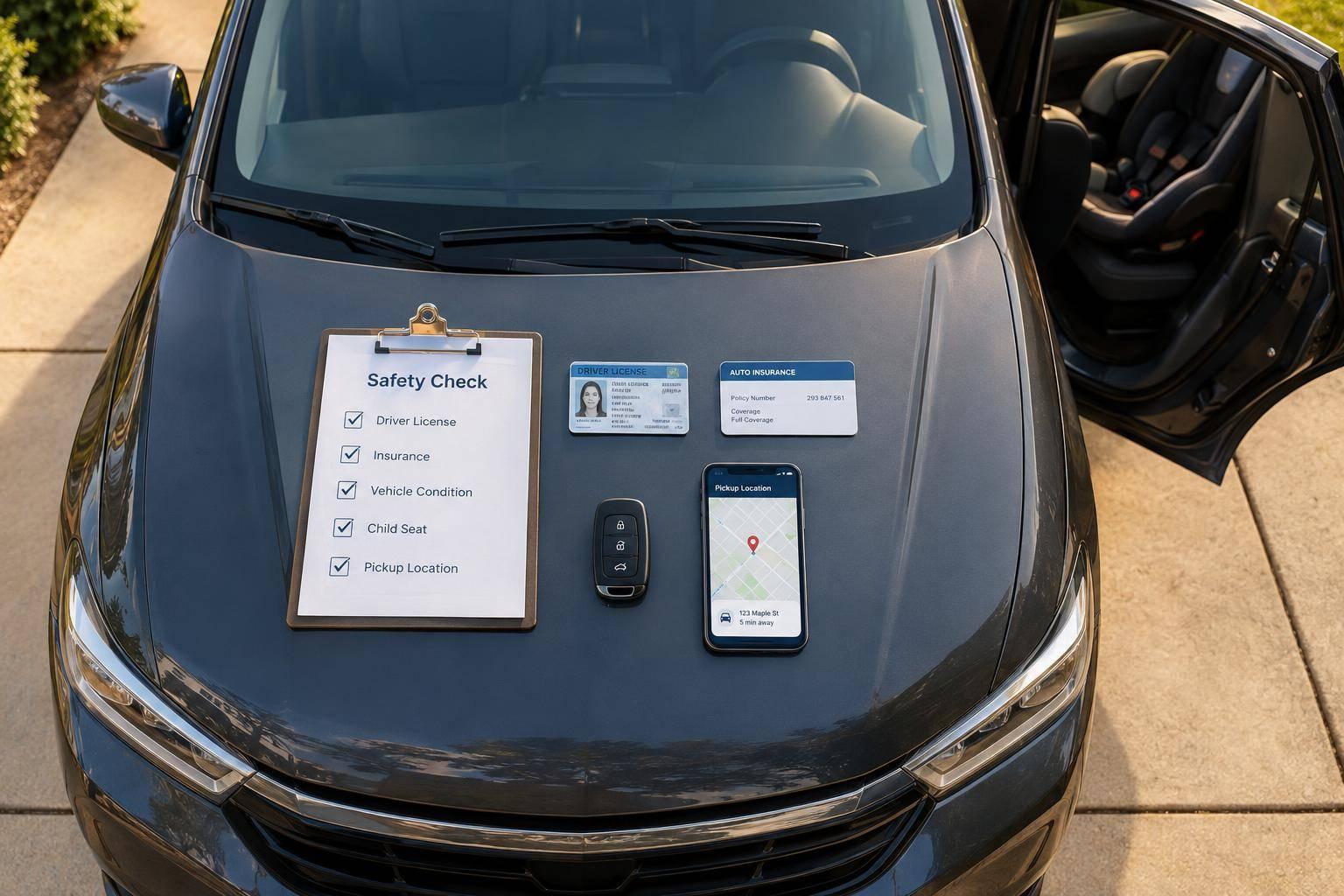
Private Transfer Safety Standards: What Checks Matter
Checklist for pre-trip vehicle checks, licences, insurance, child seats and pickup details to ensure private transfer safety.
Private Transfer Safety Standards: What Checks Matter
I check the vehicle’s condition and paperwork - not just its age - before boarding. In Spain, I ask for a valid ITV, the required passenger transport authorisation and insurance covering paid passenger journeys.
My checklist covers 3 layers of vehicle care: pre-trip checks, scheduled maintenance and statutory ITV. I also confirm:
- Vehicle safety: tyres, brakes, steering, lights, working seat belts and no unresolved safety faults.
- Passenger needs: correctly fitted child restraints, agreed wheelchair access and securement, and space for everyone and their luggage.
- Pickup details: the driver’s identity and valid licence, vehicle registration, meeting point, pickup time and support number.
For cross-border travel, I ask which local rules apply. Paperwork alone is not enough: <u>if I spot a safety fault or the driver, vehicle or booked equipment does not match, I do not board</u>. I contact booking support first.
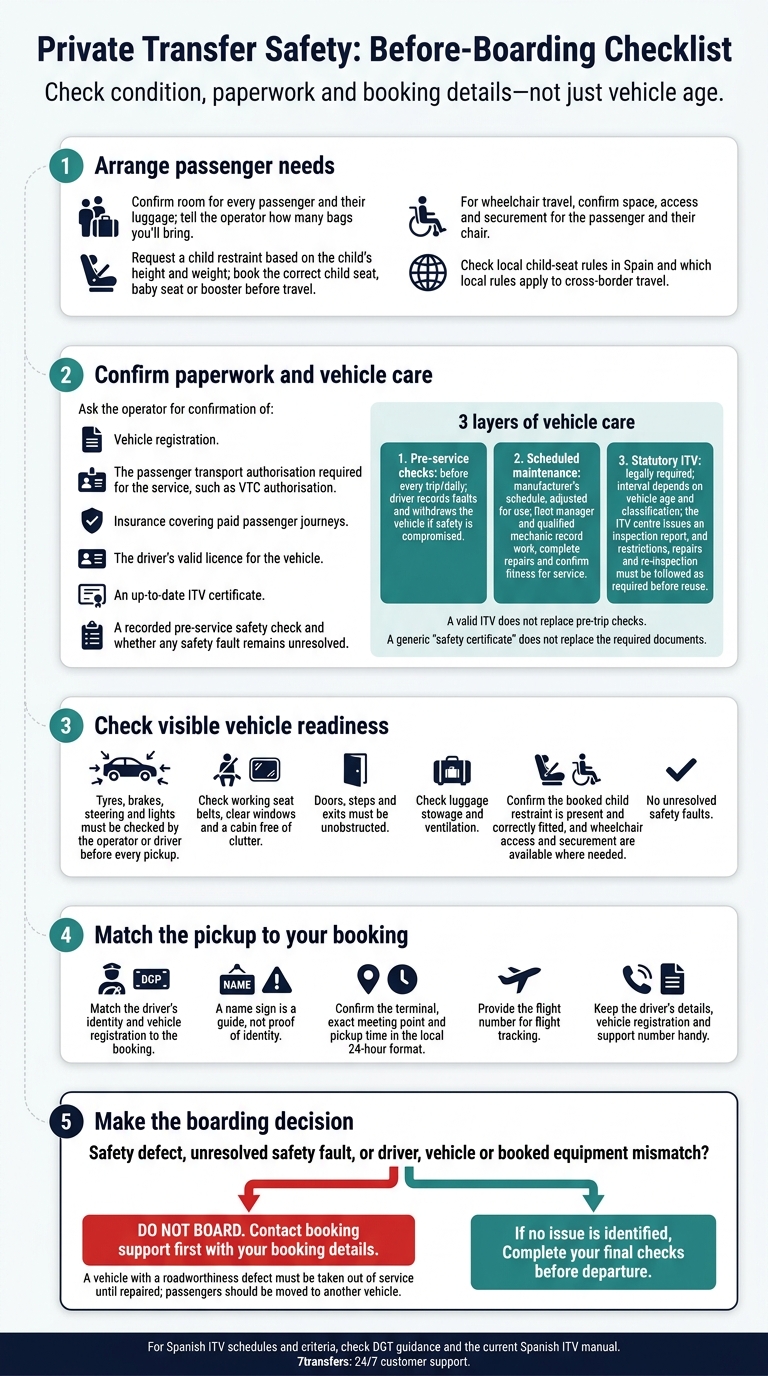
Private Transfer Safety: Before-Boarding Checklist
What Makes a Transfer Vehicle Roadworthy?
A valid ITV does not replace pre-trip checks. Take any vehicle with a roadworthiness defect out of service until it has been repaired, and move its passengers to another vehicle. Once it passes these checks, review the safety points passengers rely on inside the cabin.
Tyres, Brakes, Steering and Lights
Check tyres, brakes, steering and lights before every pickup.
The operator or fleet partner should inspect the vehicle and record any defects before carrying passengers. Any suspected defect must also be assessed before passengers travel.
Visibility, Seat Belts and Safe Entry and Exit
Make sure the windows are clear, the cabin is free of clutter, and nothing blocks the doors, steps or exits. When children are travelling, check that the child seat, baby seat or booster is correctly installed before departure.
The vehicle’s visible condition matters, but the operator’s records confirm that the checks were carried out.
sbb-itb-ff87004
How Should Operators Check and Record Vehicle Condition?
Pre-Service Checks, Maintenance and ITV
Operators need three layers of control: pre-service checks, scheduled maintenance and statutory ITV. Maintenance must follow the manufacturer’s schedule and account for how the vehicle is used.
| Check type | Frequency and status | Focus and records | Responsible person | Action after a defect |
|---|---|---|---|---|
| Pre-service inspection | Before every trip/daily | Record new faults, fluid leaks and any safety item that fails the check | Driver | Log the fault; withdraw the vehicle if safety is compromised |
| Scheduled maintenance | Manufacturer’s schedule, adjusted for use | Record maintenance of brakes, steering, suspension, engine and relevant software updates | Fleet manager and qualified mechanic | Complete repairs and confirm fitness for service |
| Statutory ITV | Legally required; interval depends on vehicle age and classification | Inspection report covering safety systems, structure, emissions and documentation | ITV centre | Follow the inspection result’s restrictions; repair and re-inspect as required before reuse |
| Document review | During routine compliance reviews and at renewal | Record validity of registration, transport authorisation, insurance and driver licence | Operator or fleet manager | Suspend the affected vehicle or driver until compliance is restored |
Check DGT guidance and the current Spanish ITV manual for the schedule and criteria that apply.
Licences, Insurance and Defect Records
Ask for written confirmation of the vehicle registration, the passenger transport authorisation required for the service - such as VTC authorisation - and commercial insurance covering passenger transport. Also request confirmation of the driver’s valid licence for that vehicle and the most recent ITV certificate.
A generic “safety certificate” does not replace these documents. Passengers need proof of compliance, not access to internal records.
Defect records should link every reported fault to its assessment, repair and clearance for reuse. Digital checklists and geotagged photos can help document that trail, but they do not replace maintenance and repair records. Ask whether any safety fault remains unresolved.
Once the vehicle and its documents are in order, check child seats, wheelchair access and pickup support.
Which Passenger Safety Arrangements Should You Confirm?
Once the vehicle checks are complete, confirm it has room for every passenger and their luggage. Check the booked vehicle’s passenger capacity and luggage space, and tell the operator how many bags you’ll bring. Before departure, check seat belts, luggage stowage and ventilation.
Arrange any child seats or wheelchair access before pickup.
Child Seats and Wheelchair Arrangements
Request a child restraint based on your child’s height and weight. Child seats, baby seats and boosters are available on request. For journeys in Spain, check local child-seat rules in advance and book the correct restraint before you travel. Before departure, confirm it’s fitted correctly.
For wheelchair travel, confirm space and access arrangements when booking. The vehicle needs to accommodate both the passenger and their chair.
With these arrangements in place, check the pickup details.
Driver Identity, Pickup Details and Support
Before boarding, match the driver and vehicle registration to your booking. Treat the name sign as a guide, not proof of identity.
Confirm the terminal, exact meeting point and pickup time, using the local 24-hour format. Provide your flight number so the operator can track your flight. If the driver, vehicle or booked safety equipment differs from your booking, contact booking support before boarding.
Conclusion: What Should You Check Before Departure?
Before departure, make one final check:
- Paperwork: ask the operator to confirm their passenger transport authorisation, the driver’s valid licence, passenger transport insurance, an up-to-date ITV and a recorded pre-service safety check.
- Readiness: confirm that seat belts work, the booked child restraint is provided, wheelchair securement is available where needed, and there’s enough room for passengers and luggage. Keep the driver’s details, vehicle registration and support number handy.
- Safety faults: ask whether any reported safety fault is still unresolved before the vehicle goes into service.
If you see a safety defect, or the vehicle, driver or booked equipment doesn’t match your booking, do not board. Contact 7transfers 24/7 customer support with your booking details.
FAQs
How can I verify a transfer’s transport authorisation?
Check your booking confirmation for the service provider’s details. 7transfers requires every partner to hold valid professional permits, up-to-date vehicle documentation and valid commercial insurance. All drivers are fully licensed and certified, and every vehicle has comprehensive insurance.
Have a question about your booking? 7transfers support is available 24/7 through its website, by email or via the phone numbers listed in your confirmation.
Which child-seat rules apply to private transfers in Spain?
In Spain, children under 135 cm must use a restraint system suited to their size and weight. When booking with 7transfers, you can request child seats, baby seats or Maxi-Cosi options.
These options are subject to availability, and a small supplement may apply depending on your route. Include your requirements when booking so the vehicle has the right seats before you arrive.
What safety checks change for cross-border transfers?
For cross-border transfers, operators must check that vehicles meet local inspection and safety standards in every region along the route. Drivers must hold the required professional passenger transport permits, and valid commercial insurance must cover international passenger transport.
At 7transfers, we require every vehicle to be under 5 years old, with up-to-date documentation - including registration and insurance - for every trip.